Why prices won’t crash + housing worth $12.7 trillion + Disasters lift building costs

Australia’s housing downturn is underway, but new analysis from Ray White suggests the national decline may be relatively contained.
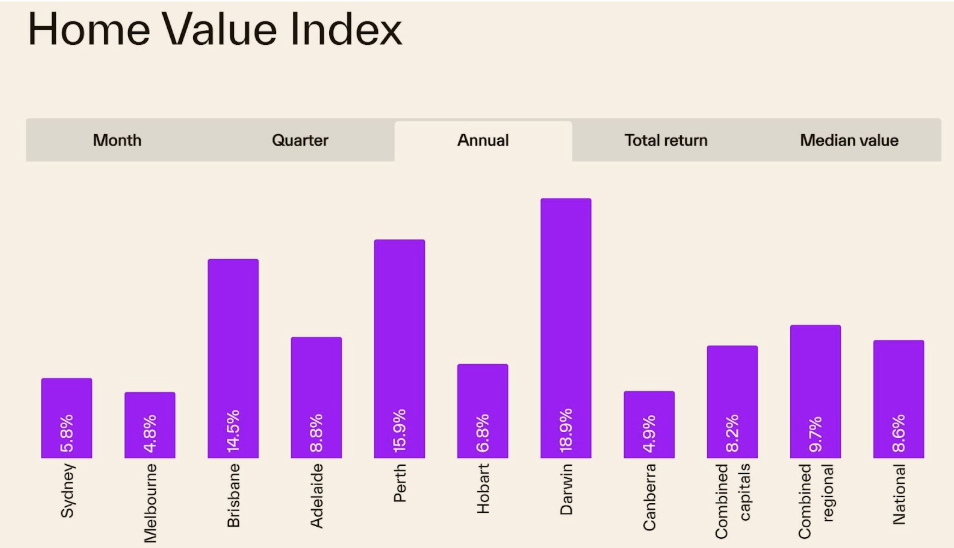
National house values fell 0.8% in July and 2.0% over the three months to July, according to Cotality. However, they remain 5.7% higher than a year ago.
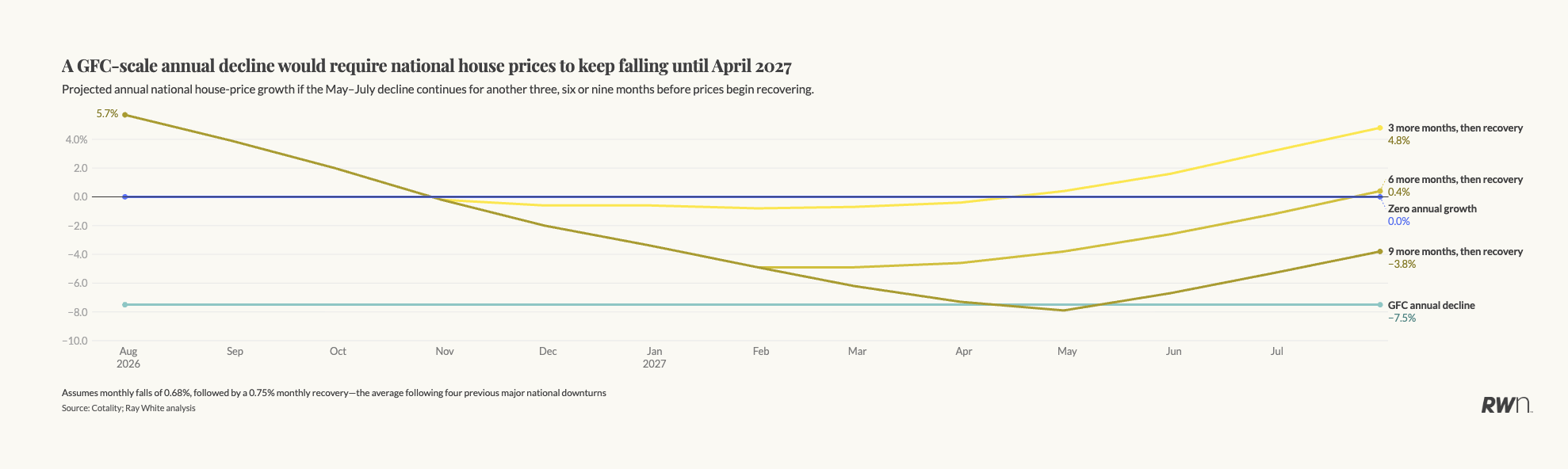
Ray White chief economist Nerida Conisbee modelled what could happen if prices continued falling at their recent pace of 0.68% per month.
If that continued for another six months, the annual decline would reach about 4.9%. For the fall to reach 7.9% – comparable with the Global Financial Crisis – prices would need to keep declining at the recent pace until April 2027.
Importantly, Conisbee said the current downturn is very different from the GFC, which involved a global credit shock and severe financial-system stress. Today, transaction volumes are exceptionally low, but there is no equivalent shock forcing large numbers of homeowners to sell.
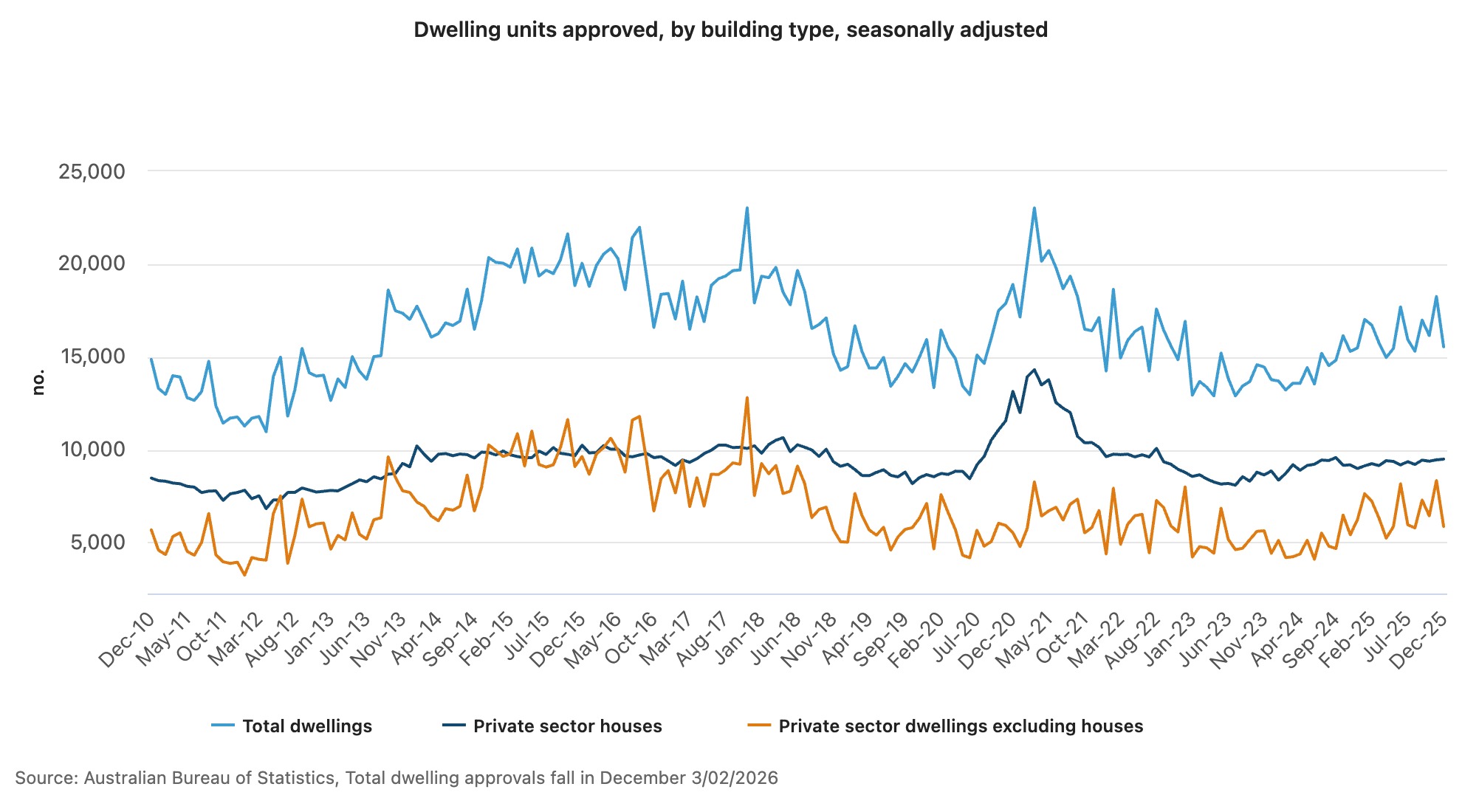
Conisbee also identified several factors that could limit the downturn, including greater interest rate certainty, improving investor returns, high construction costs and the continuing shortage of housing.
So while prices may fall further, the underlying conditions suggest the national downturn could ultimately prove relatively shallow.
Australian housing worth $12.7 trillion
Australia’s residential property market has softened – but its total value remains significantly higher than a year ago.
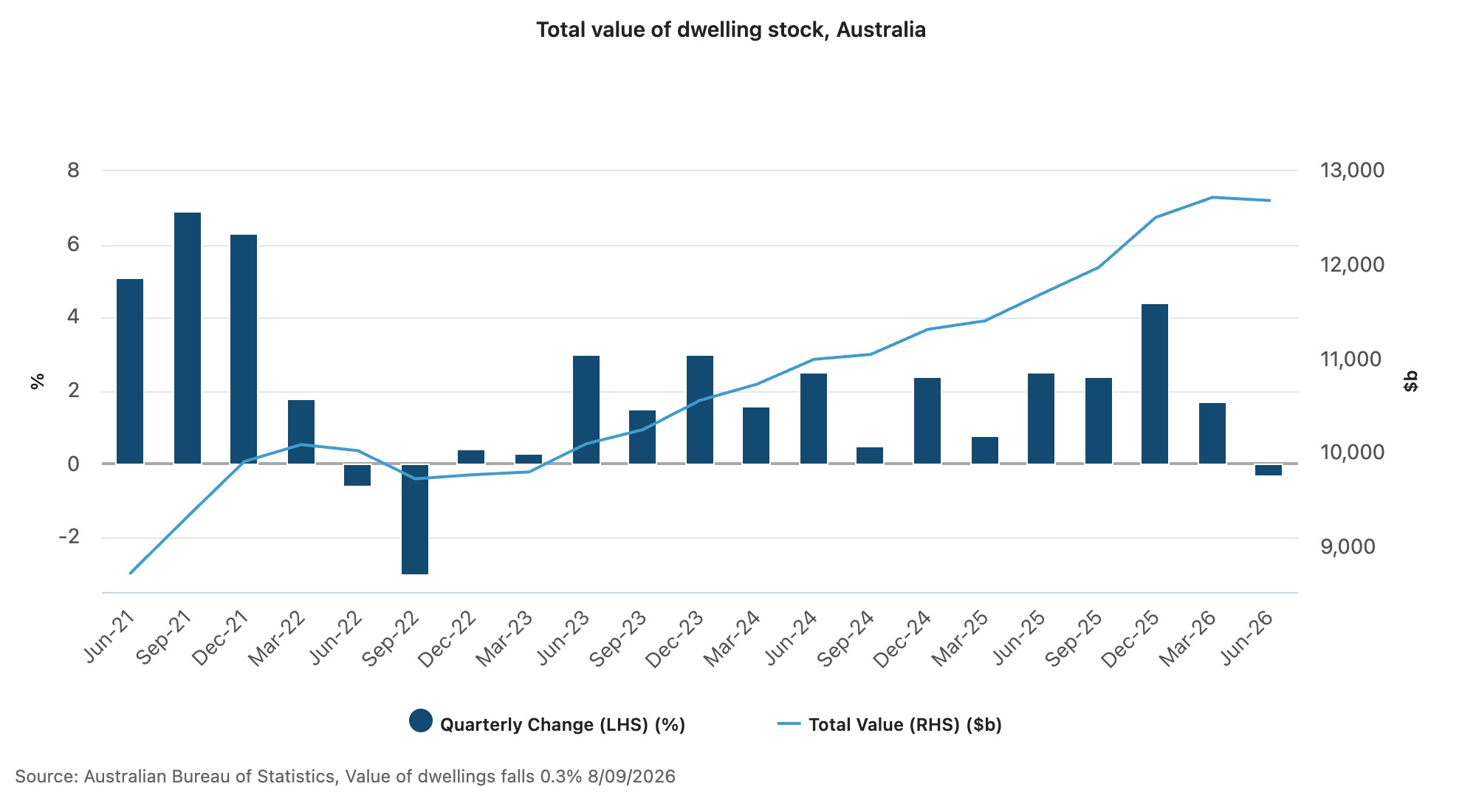
The combined value of Australia’s 11.4 million residential properties fell 0.3%, or $34.1 billion, during the June quarter to $12.7 trillion, according to the Australian Bureau of Statistics (ABS).
It was the first quarterly fall since September 2022, with the national mean dwelling price declining 0.7% to $1.1 million.
However, the downturn wasn’t universal. Mean prices fell in New South Wales, Victoria and the ACT, but increased in every other state and territory.
And despite the quarterly decline, Australia’s residential property stock is still worth 8.5% more than it was a year ago.
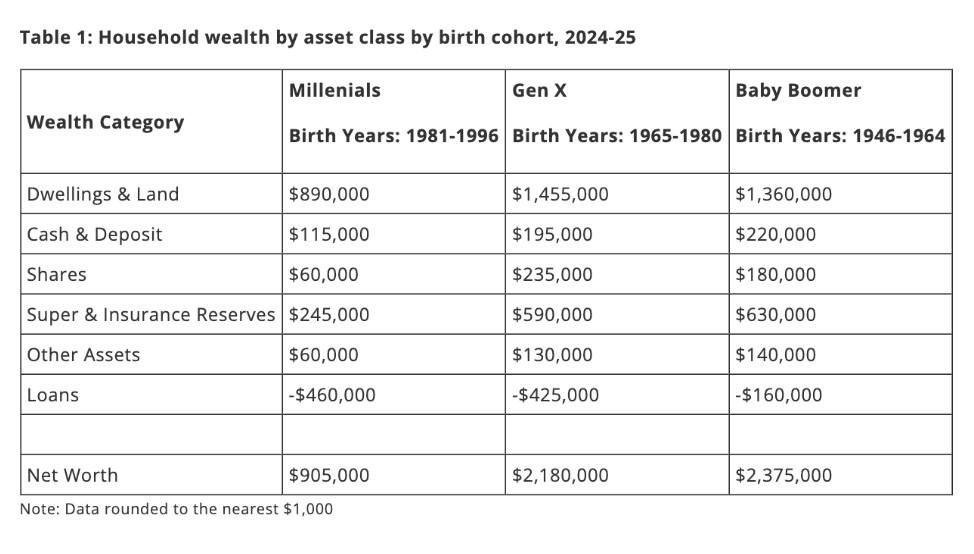
So while the market has cooled, Australian homeowners are collectively sitting on considerably more housing wealth than 12 months earlier.
Disaster repairs add to building cost pressures
Australia isn’t just trying to build more homes. It’s also having to repair hundreds of thousands of homes damaged by extreme weather.
Between January 2022 and June 2026, insurers received more than 400,000 claims for homes needing repair or rebuilding following declared natural disasters, according to the Insurance Council of Australia.
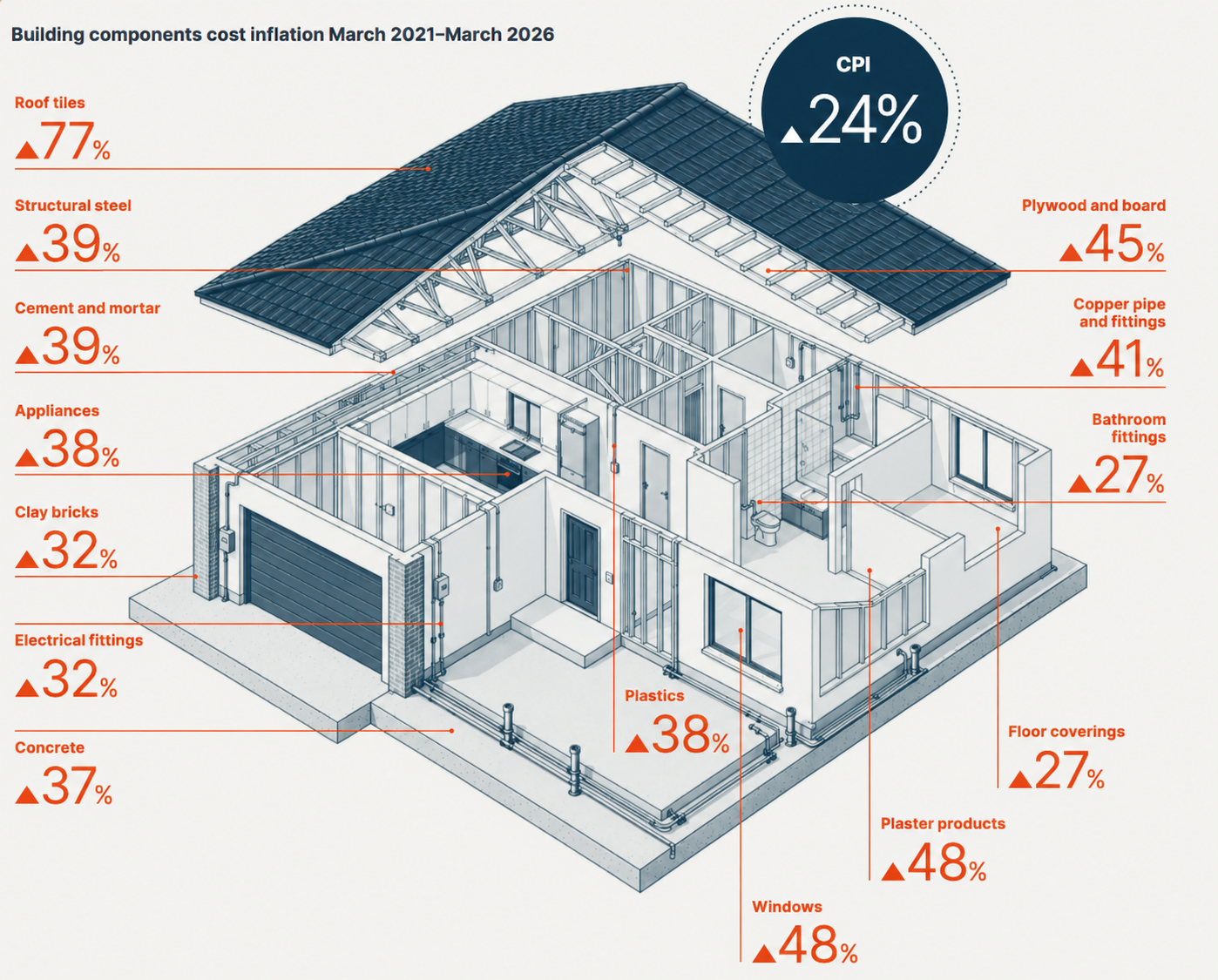
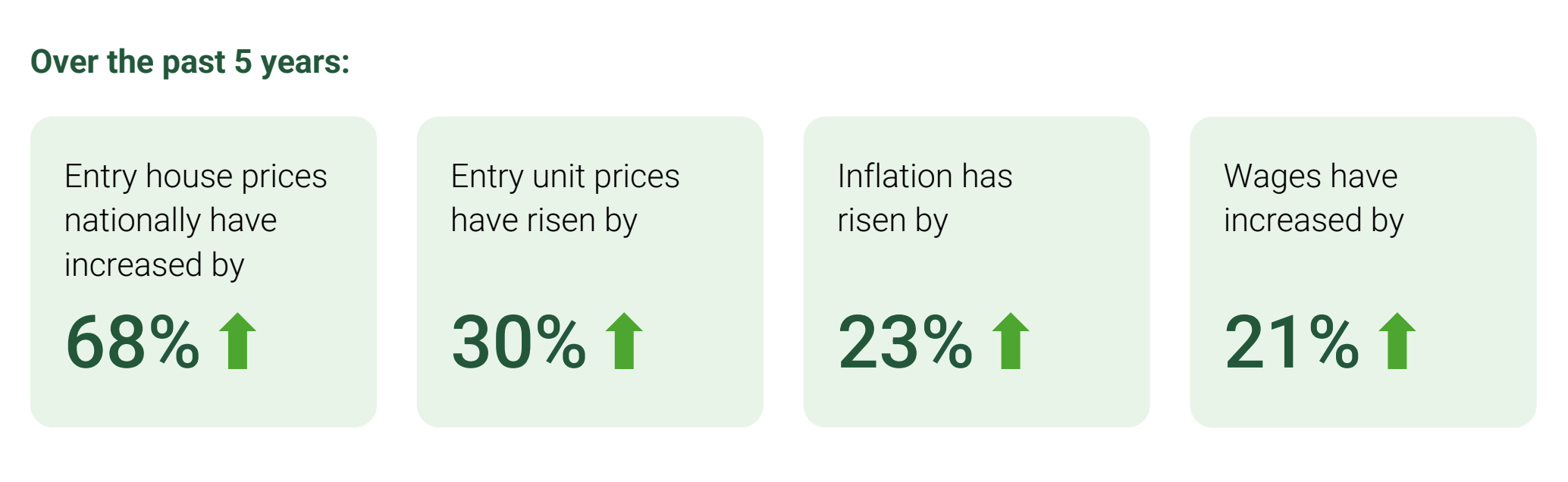
Those claims had a combined insured cost of $11.3 billion. At the same time, Cotality data shows construction costs rose around 30% over the five years to March 2026, compared with a 24% rise in inflation.
Some of the materials commonly needed after storms, hail and cyclones have risen much more sharply:
* Roof tiles = +77%
* Windows = +48%
* Plaster products = +48%
* Plywood and board = +45%
Labour costs have also climbed, including a 50.4% increase for roofers and 46.4% for glaziers.
That matters because insurers and homebuilders are competing for many of the same trades and materials, meaning disaster repairs can put further pressure on already-elevated construction costs – while Australia is also trying to increase housing supply.